
 Ha Noi
 Ho Chi Minh
 Da Nang
 Ha Long Bay
 Ninh Binh
 Sapa
 Siem Reap
 Phnom Penh
 Koh Rong Island
 Sihanoukville
 Luang Prabang
 Vientiane
 Pakse
 Xieng Khouang
 Savannakhet


 Private Tours
 Group Tours
 Multi-Day Tours
 Tailor-made Tours
 MICE Tours
 Dinner Cruise
 Day Cruise
 River Cruise
 Overnight Cruise
 Luxury Hotel
 Wellness & Spa Resort
 Heritage Resort
 Boutique Hotel
 Business & Convention Hotel
Need Help?
(+84) 917 506 881

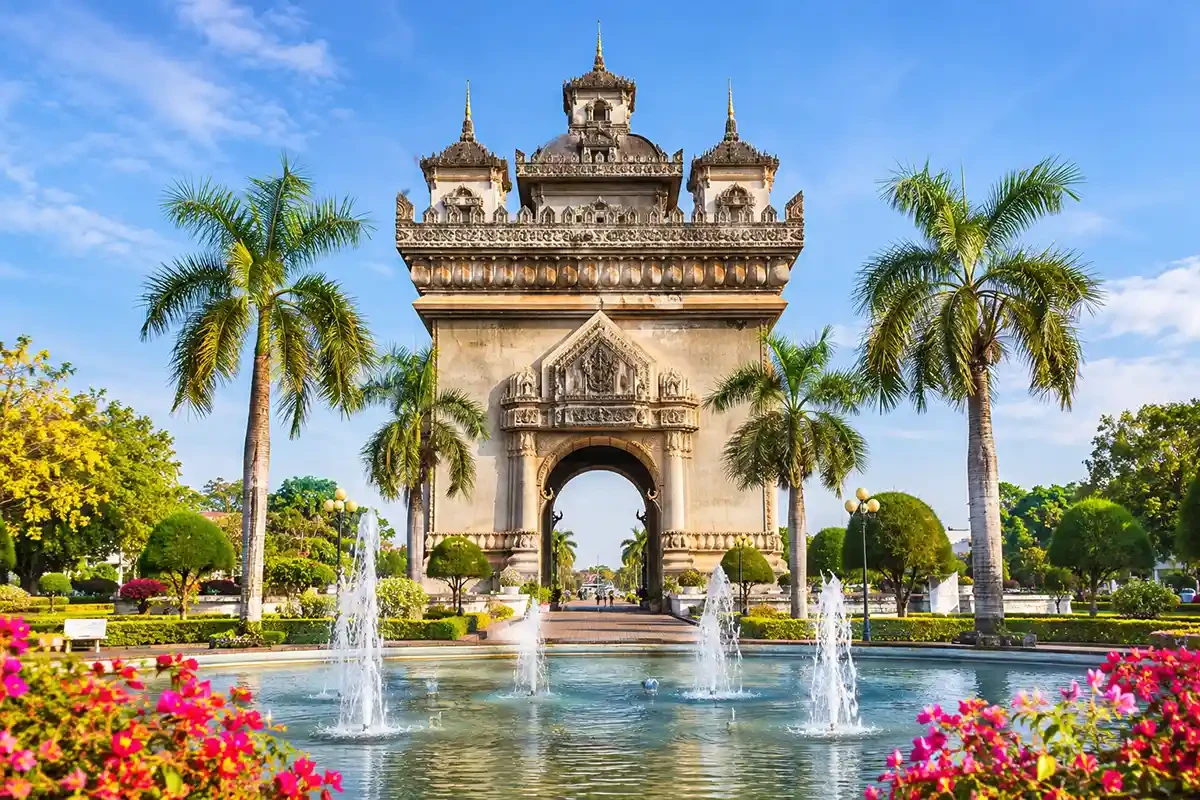
Patuxai Victory Monument is one of the most recognizable attractions in Vientiane and a popular destination for travelers exploring the capital of Laos. Often compared to the Arc de Triomphe in Paris, this impressive monument combines French architectural influences with traditional Lao decorative elements, creating a distinctive landmark that reflects the country's history and cultural identity.
The monument features a grand central arch, decorative towers and intricate carvings inspired by Lao mythology and Buddhist traditions. Its ceiling is beautifully decorated with colorful paintings, while traditional motifs and mythical figures create an impressive artistic display throughout the structure.
Visitors can climb the internal staircases to reach the upper levels, where panoramic views reveal the surrounding avenues, gardens and cityscape of Vientiane. The landscaped park and fountains around the monument also provide a pleasant setting for photography and relaxation.
Patuxai is centrally located along Lan Xang Avenue and can easily be reached by taxi, tuk-tuk, bicycle or private sightseeing vehicle. It is also conveniently connected to other major attractions, including Wat Sisaket and Pha That Luang.
Patuxai was constructed in the 1960s as a memorial honoring those who fought for Laos' independence. Its name can be translated as Victory Gate, reflecting its historical and national significance.
Today, the monument remains an important symbol of Vientiane. Its distinctive architecture, historical meaning and elevated viewing platform make it one of the essential stops on any city sightseeing tour.