
 Ha Noi
 Ho Chi Minh
 Da Nang
 Ha Long Bay
 Ninh Binh
 Sapa
 Siem Reap
 Phnom Penh
 Koh Rong Island
 Sihanoukville
 Luang Prabang
 Vientiane
 Pakse
 Xieng Khouang
 Savannakhet


 Private Tours
 Group Tours
 Multi-Day Tours
 Tailor-made Tours
 MICE Tours
 Dinner Cruise
 Day Cruise
 River Cruise
 Overnight Cruise
 Luxury Hotel
 Wellness & Spa Resort
 Heritage Resort
 Boutique Hotel
 Business & Convention Hotel
Need Help?
(+84) 917 506 881

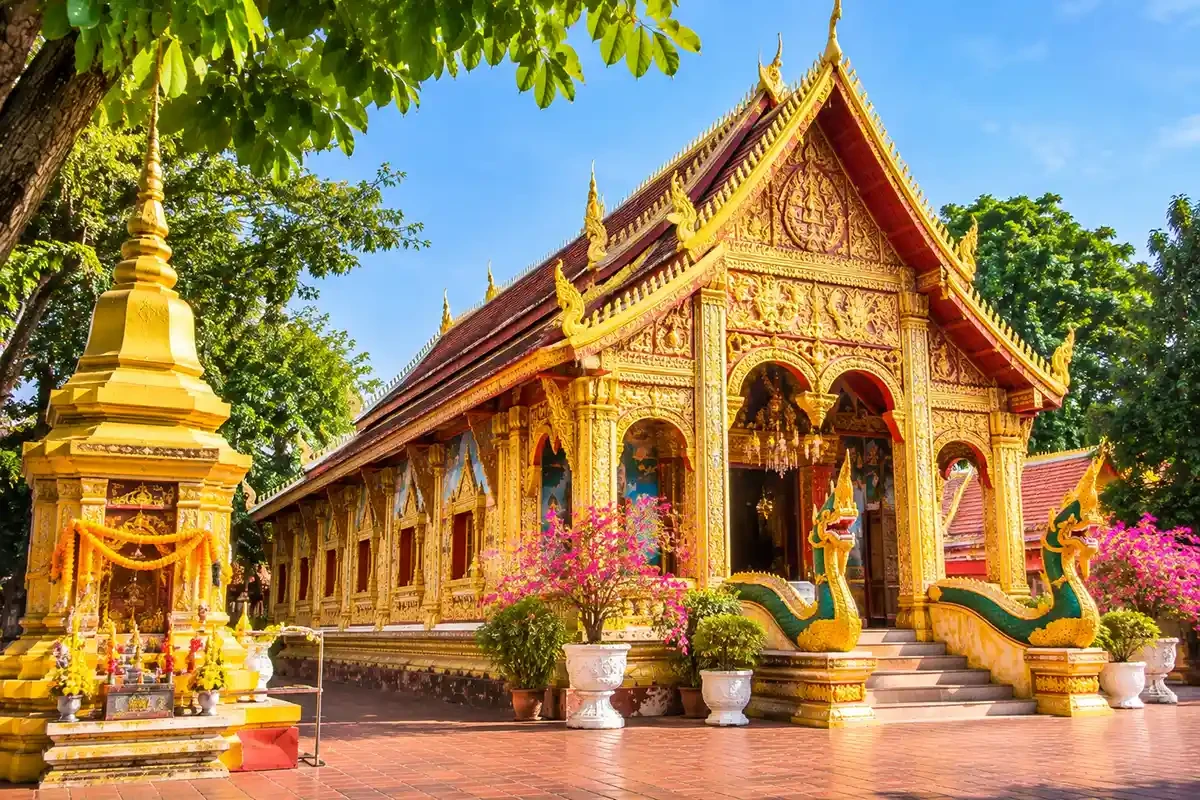
Wat Si Muang is an important religious landmark in Vientiane, known for its connection to the city's protective spirits and traditional Buddhist practices. Unlike some historic monuments visited mainly for their architecture, this temple remains a vibrant place of worship where local residents come to pray, make offerings and seek good fortune.
The temple complex features colorful shrines, golden Buddha images, decorative roofs and beautifully arranged religious offerings. Its most significant feature is the sacred city pillar, which is closely associated with the spiritual protection of Vientiane.
Visitors can observe local worshippers offering flowers, incense and candles while participating in traditional blessing rituals. The atmosphere provides a fascinating insight into how Buddhism and older local spiritual beliefs coexist in Lao culture.
Wat Si Muang is located in the Sisattanak area of Vientiane and can be reached by taxi, tuk-tuk or private vehicle. It is a convenient stop when exploring the southern part of the city center.
The temple is closely associated with the foundation of Vientiane and the establishment of its city pillar, known locally as Lak Muang. According to local legend, a woman named Nang Si sacrificed herself during the installation of the pillar, and her spirit became associated with the protection of the city.
Today, Wat Si Muang continues to play an important role in the religious life of local residents. Its spiritual atmosphere and traditional ceremonies make it one of the most interesting cultural experiences in Vientiane.